
How to Reduce Human Error in the Workplace
From minor mistakes to major incidents, human error costs time, money, and lives. Here's how to get ahead of it.
Human error remains one of the most significant risks in blue-collar industrial workplaces, including sectors like manufacturing, construction, oil and gas, and utilities. According to the U.S. Bureau of Labor Statistics, 5,283 fatal work injuries were recorded in a recent year, with many involving human factors such as missed procedures, inadequate training, or equipment misuse1. From minor oversights to critical mistakes, the consequences can range from production delays to serious injuries or fatalities. OSHA states that failures in process safety management can lead to "catastrophic releases" with the potential for "serious injuries or fatalities2. Reducing human error in the workplace is not only about preventing accidents but also about improving reliability, maintaining operational flow, and helping protect employees. With the right safety management strategies, tools, and leadership, companies can effectively lower risks and build a culture of continuous improvement.
Understanding The Causes Of Human Error In The Workplace
Human Factors and Workplace Conditions
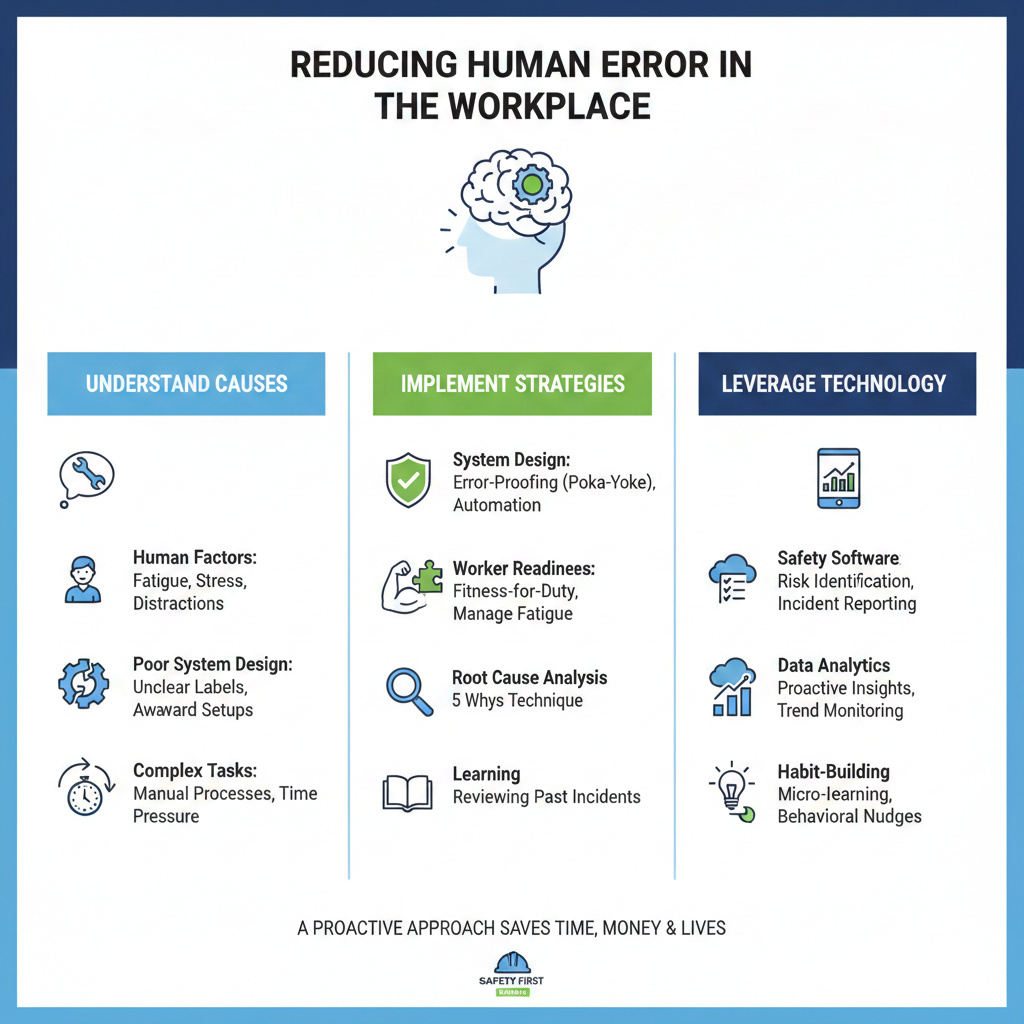
Many causes of human error are rooted in human factors. Fatigue, distractions, and workplace stress are common contributors. Poor system design can also play a role, making tasks more complex than necessary or increasing the likelihood of errors with unclear controls or cramped environments3. Common design-related issues include:
- Control panels that lack clear labeling
- Tools placed out of reach
- Workstations arranged in ways that force awkward or rushed movements
When the environment or workflow is not supportive, even well-trained employees are more likely to make mistakes.
Complexity of Tasks and Processes
Workplaces that rely heavily on manual processes or involve high-risk tasks increase the cognitive load on workers. Research published in Applied Ergonomics confirms that increased cognitive load during complex manual tasks significantly elevates the likelihood of errors and reduces task efficiency4. Complex procedures can lead to shortcuts or skipped steps, especially under time pressure. This aligns with James Reason's Swiss Cheese Model of human error, which illustrates how multiple system weaknesses can align to allow failures through. When gaps in defenses, such as unclear procedures, time stress, or inadequate training, line up, incidents become more likely5. When tasks require sustained focus without the right types of support, the risk of mistakes can increase. Adequate support may include:
- Visual job aids
- Step-by-step checklists
- Digital prompts
- Supervisor oversight
All of these can help reduce mental load and promote more consistent performance.

The Impact Of Human Error On Workplace Safety
Consequences for Safety and Operations
Human error is often associated with a wide range of workplace outcomes, from near misses to more serious incidents. These outcomes may include injuries, fatalities, or operational interruptions that affect production schedules and team morale. In some cases, the effects of such events may extend beyond immediate challenges, potentially including regulatory attention or reputational concerns, especially when incidents are more severe or publicly visible.
The Hidden Costs of Errors
Beyond the visible damages, human error can silently erode productivity. Delays in operations, increased rework, and the cumulative effect of small mistakes can contribute to substantial costs. For example, U.S. employers collectively spend nearly $1 billion per week on direct workers' compensation costs, much of it stemming from preventable workplace incidents6. Even minor errors, when repeated, may contribute significantly to these costs, especially in high-volume or time-sensitive environments.
Safety Management Strategies For Reducing Human Error
System Design and Engineering Controls
A well-designed system can serve as a valuable defense against human error. Error-proofing techniques, such as poka-yoke, aim to reduce the likelihood of mistakes by making incorrect actions less likely or easier to detect. For example, color-coded plug-and-socket systems in manufacturing lines help prevent connection errors during assembly, a simple poka-yoke method that has been widely adopted in lean production environments. The concept of poka-yoke was introduced by Shigeo Shingo as part of the Toyota Production System to support zero-defect processes7. In many settings, automation may help improve consistency by removing manual steps that are more susceptible to error, potentially supporting safer and more reliable workflows.
Fitness for Duty and Worker Readiness
Ensuring employees are physically and mentally prepared can help reduce human error at work. Managing fatigue, stress, and external distractions can help maintain focus and reduce error likelihood. Regular fitness-for-duty assessments and supportive workplace policies can contribute to sustained employee readiness. Organizations such as the American College of Occupational and Environmental Medicine (ACOEM) recommend fitness-for-duty evaluations as part of a proactive approach to workplace safety, especially in safety-sensitive roles8.
Root Cause Analysis (RCA)
Investigating incidents through root cause analysis (RCA) allows safety managers to look beyond the surface and understand the underlying issues contributing to unsafe conditions or events. A common and widely used method is the 5 Whys technique, originally developed as part of the Toyota Production System9, which involves asking "why" multiple times until the root cause is identified. This proactive approach helps prevent similar mistakes from recurring by addressing foundational causes, rather than temporarily treating symptoms.
Learning from Real-World Scenarios
Reviewing past incidents can often reveal useful insights that may not be immediately obvious during day-to-day operations. Inadequate training and communication gaps directly contribute to maintenance errors, especially when they lead to delays. These weaknesses often include:
- Outdated procedures
- Unclear shift responsibilities
- Missing documentation
- Inconsistent onboarding practices
Analyzing these scenarios can highlight process weaknesses and support more informed decisions that reduce the chance of repeated errors.
The Role Of Workplace Safety Software In Reducing Human Error
Digital Tools for Risk Identification and Management
Workplace safety software simplifies safety management by centralizing data and automating key tasks. These tools support:
- Risk assessments
- Incident reporting
- Compliance tracking
- Hazard management
OSHA supports the use of leading indicators as proactive, predictive tools for identifying potential safety risks before incidents occur. By tracking patterns over time, software can help identify leading indicators for safety, such as near misses, overdue inspections, or training gaps, providing early warnings of potential risks10.
Proactive Insights Through Data Analytics
Safety software can help translate operational data into actionable insights. By analyzing trends, such as near-miss incidents, recurring equipment failures, or delays in corrective actions, safety managers can more effectively anticipate emerging risks and intervene early. Monitoring these patterns allows organizations to address potential weaknesses proactively, which may help minimize human error before incidents occur.
Habit-Building and Continuous Learning
Modern safety platforms go beyond data tracking. They actively support behavior change through micro-learning modules, targeted training, and behavioral nudges. Behavioral nudges are subtle prompts or design features that guide individuals toward safer decisions without removing choice. These nudges directly reinforce safe behaviors, and by delivering brief, consistent reinforcement, they help build daily habits that reduce workplace risk and embed safety into everyday routines.
Evaluating Safety Software For Your Organization
Assessing Organizational Needs
Choosing the right safety software starts with understanding your organization's size, industry-specific risks, and data management requirements. Smaller organizations may need simple, easy-to-deploy tools, while larger enterprises often require scalable systems with integration capabilities. High-risk industries like construction or manufacturing may prioritize incident tracking and compliance features, whereas lower-risk environments might focus more on training and behavior monitoring. Likewise, organizations with complex data needs benefit from platforms that offer advanced analytics and centralized reporting. Tailoring solutions to these factors helps support both effectiveness and long-term relevance.
Key Features to Look For
Effective safety management systems typically include core functions such as incident tracking to capture real-time data, compliance management to stay ahead of regulatory requirements, risk assessments, and customizable reporting capabilities. Integration with existing systems and the ability to track employee training status help maintain workforce readiness. These features work together to support continuous improvement across safety programs and enable organizations to identify trends before they become serious issues.
Choosing the Right Supplier
Select a supplier with a strong history of successful deployments, positive client feedback, or demonstrated safety improvements in similar industry settings. Evaluate their ability to customize solutions, provide responsive support, and maintain a collaborative relationship through regular check-ins, implementation support, and shared goal-setting during rollout. A strong vendor partnership can make the difference between a tool that collects dust and one that drives real change.
Building A Culture Of Safety And Continuous Improvement
Leadership Commitment and Safety Culture
Strong leadership directly shapes safety culture and plays an important role in reducing human error in the workplace. When leaders visibly prioritize safety, employees are more likely to follow suit. Leadership actions that strengthen safety culture include promoting open reporting, encouraging proactive risk identification through hazard walkthroughs and employee check-ins, and reinforcing safety importance across all levels of the organization.
Ongoing Training and Process Evaluation
Workplace safety benefits from regular updates and evaluations. Continuous training helps employees stay current with procedures, while routine process reviews, such as safety audits, walkthroughs, and task observations, help identify operational gaps. Embedding safety into daily operations supports long-term incident prevention through safety leadership.
Conclusion
Reducing human error in the workplace benefits from a combination of understanding human factors, applying strong safety management strategies, and leveraging modern tools like workplace safety software. By addressing the underlying causes of human error and focusing on leading indicators for safety, a practice supported by frameworks like ISO 45001, organizations can take more proactive steps toward incident prevention. With committed leadership and a culture of continuous improvement, companies can help create safer environments where employees are more likely to perform reliably and confidently.
To learn more schedule a 20 minute introductory call consultation.
**** If you found the post helpful please like and share *****
Sources:
[1] U.S. Bureau of Labor Statistics. (2024). National Census of Fatal Occupational Injuries in 2023. https://www.bls.gov/news.release/pdf/cfoi.pdf
[2] Occupational Safety and Health Administration. (n.d.). Process safety management. U.S. Department of Labor. https://www.osha.gov/process-safety-management
[3] NIOSH. Ergonomics and Human Factors. Available at: https://www.cdc.gov/niosh/topics/ergonomics/
[4] Hermens, F., Bennett, D., Johnson, A., & Stephens, R. (2021). Effects of cognitive load on performance and muscle activity during a manual assembly task. Applied Ergonomics, 93, 103370. https://doi.org/10.1016/j.apergo.2021.103370
[5] Reason, J. (1990). Human error. Cambridge University Press.
[6] Occupational Safety and Health Administration. (n.d.). Business case for safety and health: Costs. U.S. Department of Labor. https://www.osha.gov/businesscase/costs
[7] Shingo, S. (1986). Zero quality control: Source inspection and the poka-yoke system. Productivity Press.
[8] American College of Occupational and Environmental Medicine. (2019). Guidance for the medical evaluation of workers in safety-sensitive positions. https://acoem.org
[9] Ohno, T. (1988). Toyota production system: Beyond large-scale production. Productivity Press.
[10] OSHA. Using Leading Indicators. Available at: https://www.osha.gov/leading-indicators


 OSHA Recordkeeping for ...
Latest Posts
- Corrective Action Management: From Open Item to Verified Fix
- OSHA Recordkeeping for Multiple Locations | Multi-Site Guide
- Reducing Human Error in the Workplace: Strategies, Tools, and Safety Leadership
- OSHA Form 301: Requirements, Completion Guide, and Best Practices
- 5 Best Practices for Creating a Storyboard & Shot Sheet to Develop an eLearning Course
Topics
See all
- Safety Training
- Safety Resources
- News and Regulatory Alerts
- EHS Software
- Case Studies
- Violations and Penalties
- What is OSHA
- Health and Safety
- COVID-19 Corona Virus
- Conferences
- Near Misses
- OSHA Top 10 Cited Standards
- Workforce Safety
- Driver Safety
- Slips, Trips and Falls
- Whistle Blower Protection
- Experience Modification Rate
- Featured
- Hazard Communication
- Joint Employment
- Recordkeeping and Reporting
- Workers Comp
- Arc Flash
- Chemical Safety
- E-Learning
- Electrical Safety
- Foreign Languages
- How to Increase the EHS Budget
- Human Error
- Lockout / Tagout
- Mobile Apps
- OSHA 301
- OSHA Inspections
- OSHA Severe Injury Reporting Program
- OSHA Violations
- Parking Lot
- Repeat Offender Penalties
- SOC 2 Compliance
- Safety Meetings
- Salary Surverys
- Stop Work Authority
- Winter Safety
- Workers' Compensation
- audit and Inspections
- E-Learning
- Educational Strategies
- Featured
- Self Directed Learning
- Blended Learning
- Social Learning
- eLearning Storyboard
